
WP Perspectives Issue 24: 2025 the Year of the Page Builder
“The reports on the death of page builders were greatly exaggerated.”
Matt twain
Occasionally predictions are epically wrong. Such is the case with the prediction that Gutenberg and the Site Editor would kill off page builders. Page builders are seeing a resurgence in 2025 due to a “perfect storm” of factors and events.
Gutenberg Derailed
Remember several years ago WordPress freelancers, agencies, site builders were told in no uncertain terms that page builders were dead. Gutenberg had grown beyond being just a content editor, to be a page builder and full site editor. It was event hinted that not using the Site Editor was somehow a betrayal of the project. When people pointed out issues with the Site Editor these were acknowledged, but always with the refrain that the Site Editor would get there soon.
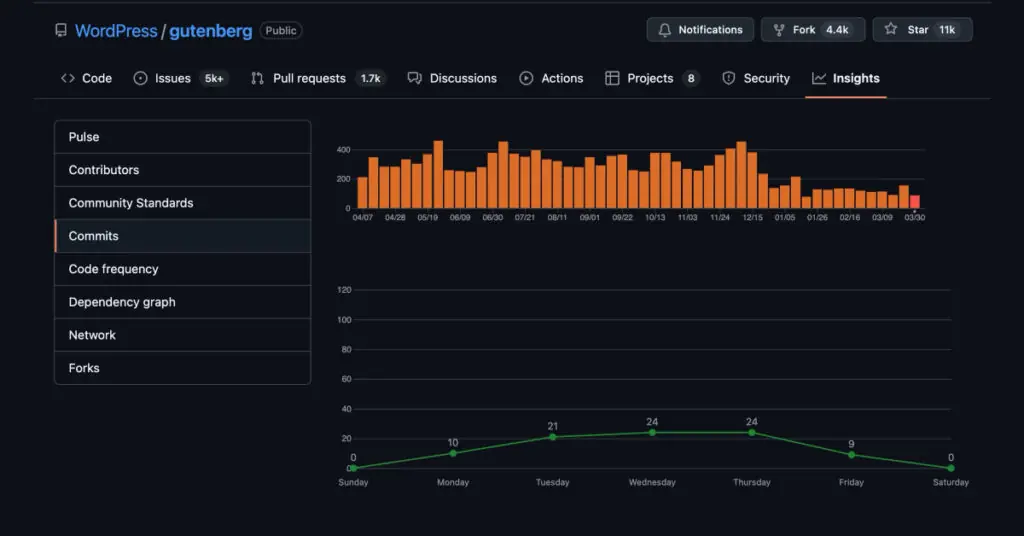
In the last quarter of 2024 Matt Mullenweg threw a spanner into the well-oiled WordPress machine. He attacked WP Engine and, like an auto-immune disease, he also attacked the WordPress community. Due to Matt’s erratic behavior and the resulting uncertainty there was a very noticeable pull-back by the WordPress community. The project had been dealt a body blow. Further, with enormous legal fees and potential liabilities pending, Matt cut back Automattic’s contributions to the project. He also rebuffed volunteers’ offers to pick up the reigns and keep momentum going, and instead has limited releases to 1 a year until the legal case is over. The future of Gutenberg itself is uncertain. Remember, it is not just finishing the Site Editor that is on the line, but the redesign of the admin, built-in translation options in core, and collaboration features for content creators. The people who said that Gutenberg “would get there soon” have fallen silent.
Classic Themes Undermined by FUD
One of the main features of professional page builders is the ability to create theme templates. Sometimes called a “theme builder,” the page builder enables the creation of custom headers, footers, post and page templates, as well as the ability to create templates for Custom Post Types — all with little or no code. They accomplish this by utilizing the core system of hooks and filters to replace PHP templates, in line with the theme template hierarchy.
With the maturation of third party Gutenberg block collections, the pro version of a number of top classic themes themselves included the ability to create theme templates, or elements, using the same hooks and filters. The pro versions of Kadence theme and Kadence blocks, the Astra theme and Spectra blocks, the GeneratePress theme and GenerateBlocks, and the Blocksy theme with Stackable or Greenshift blocks, are popular and successful examples of this.
Then came Block-based themes. With the advent of block-based themes regular WordPress themes were renamed to “Classic Themes.” The name “Classic Themes” was purposefully chosen to imply antiquated, old, a previous generation. WordPress 5.9 was released in January 2022. It included the beta version of the Full Site Editor and the Twenty Twenty-Two theme, which is a block-based theme. In a retrospective discussion shortly after the 5.9 release Matias Ventura, the lead architect of the Gutenberg project, commented that everyone should switch to the Full Site Editor and block themes, though he conceded that it might take some time for agencies to make the move.
The introduction of the Site Editor and block themes dealt a blow to classic themes. Yes, it was widely appreciated that the pro versions of classic themes offered a better user experience and that the Site Editor was not very mature, however, the future of classic themes was mired in fear, uncertainty, and doubt. Of course people still create sites with the Site Editor and with the pro theme builder versions of classic themes, but there is no clear vision of the way forward.
First Quarter 2025
There was more page builder news, excitement, and releases in the first quarter of 2025 than in any 12 months previously. Here are some of the announcements and releases. Feel free to skim down the list to the article conclusions.
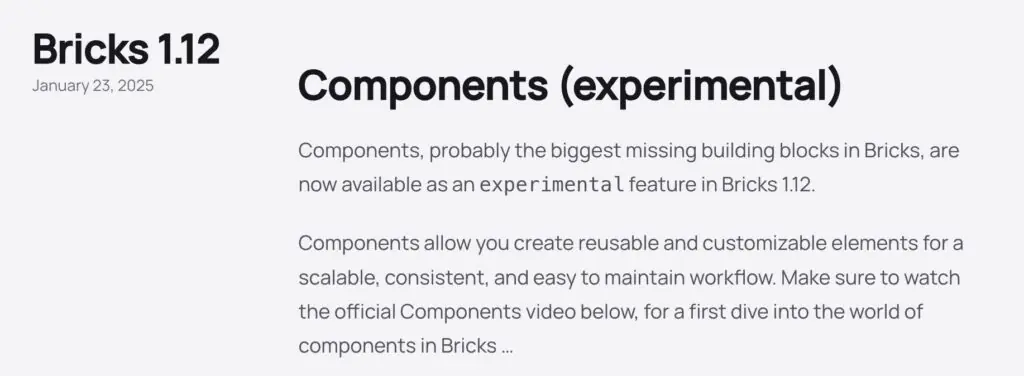
Bricks – Arguably the most advanced and powerful page builder available. There have already been two releases this year. The first included, among a number of features, experimental support for components, a global class manager, query loop and front-end filter enhancements. The second included bug fixes and improvements on existing features. A number of new features are set for beta testing in the forthcoming v2.0 release.
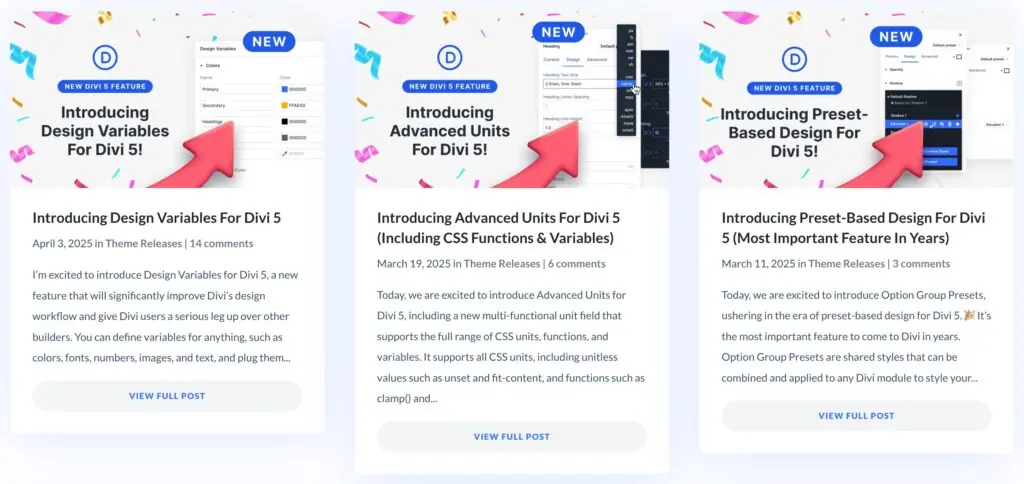
Divi – ElegantThemes took the bold step and is rewriting Divi from the ground up. There are alpha releases of the new Divi 5 every two weeks and features such as design presets, CSS variables, flexbox layouts and other modern features are included.
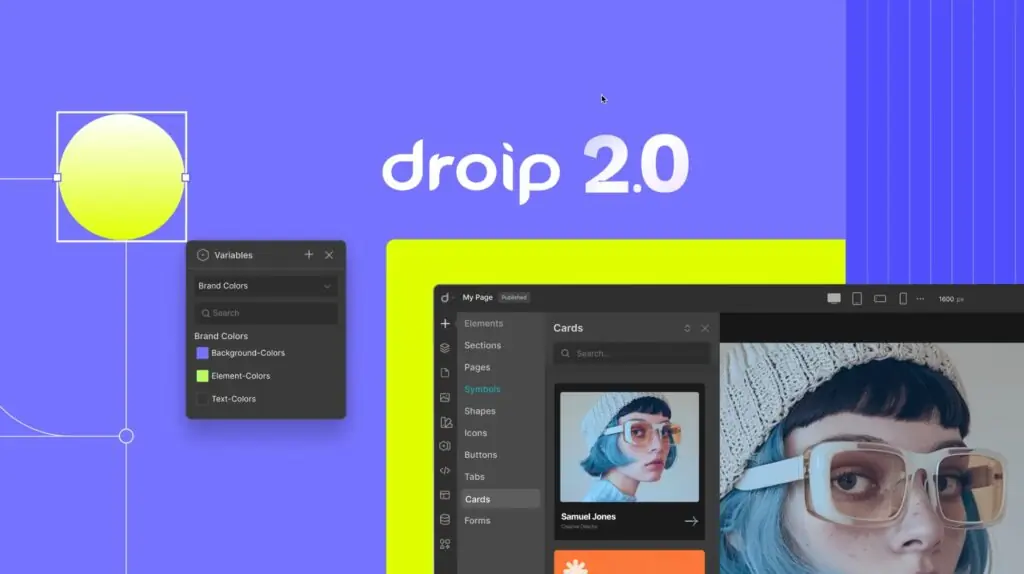
Droip – Droip is a relatively new builder that was first released late 2023. Version 2.0 was released in February of this year. Droip 2.0 includes a modern UI which is meant to serve as a workflow hub, global variables, and its own Custom Post Type and custom fields solution.
Elementor – The Elementor team has announced that they are working on version 4 which will include a CSS first workflow, a CSS interface, CSS variables, a component system, and more.
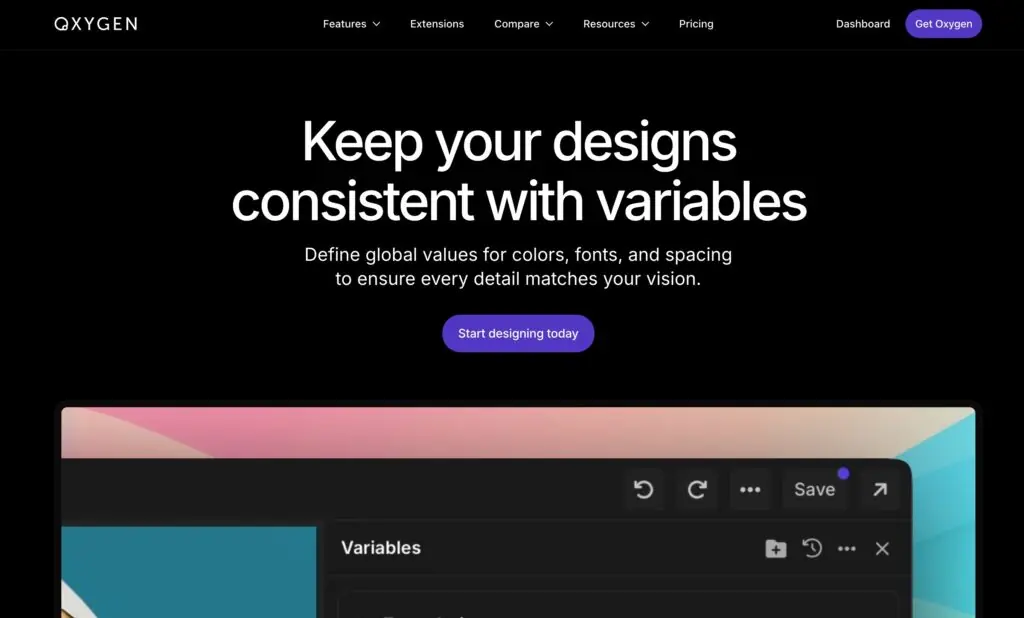
New Oxygen 6 – In late February the Oxygen team dropped a surprise announcement, the Oxygen builder had been rewritten and was released as Oxygen version 6. This included a new modern UI and the ability to use the large element collections from Breakdance. The new version was designed to provide control of HTML and CSS, has full support for CSS variables, a components system, and more.
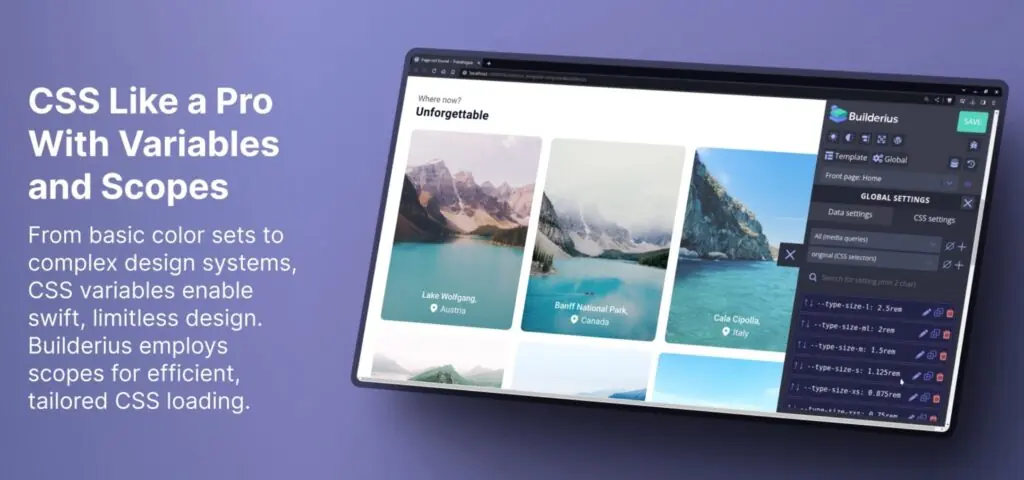
Builderius – Builderius is an Integrated Development Environment for WordPress that is in beta. It is a visual builder for page templates with a number of advanced features that are attractive for developers. These include built-in staging and production modes with optional integration with Github, dynamic queries via GraphQL, and a live editor that gives full control over HTML, CSS, and JavaScript. The new beta release of the free version of Builderius includes a CSS framework.
Etch – Etch is the new builder being developed by Kevin Geary and team. Etch is envisioned as a next generation builder for users who are familiar with HTML, CSS, and a class first workflow. An interesting feature is that Etch will save content as Gutenberg blocks, so that content can be opened or edited in Etch or in Gutenberg.
Clutch – Clutch is a new front-end builder for WordPress. It was just announced a week ago and is currently in beta.
Others – LiveCanvas has had four releases this year. Voxel has had 4 releases. Beaver Builder has had one major release and another is in alpha.
Conclusions
The listings above are snapshots of just some of the announcements so far this year. What we see is that page builders are doing what page builders do, they use WordPress as a platform for providing an enhanced editing experience and advanced capabilities. Of course if WordPress falls into a stagnate state for several years it will impact the entire ecosystem, but for the short and medium term page builders are not negatively impacted by a slower release schedule, in fact, they benefit from it. Page builders also benefit from the Site Editor being stuck in an unfinished / unpolished state, as well as from the FUD surrounding Classic themes. Many people are choosing to ignore Matt and the WordPress drama and just use a page builder.
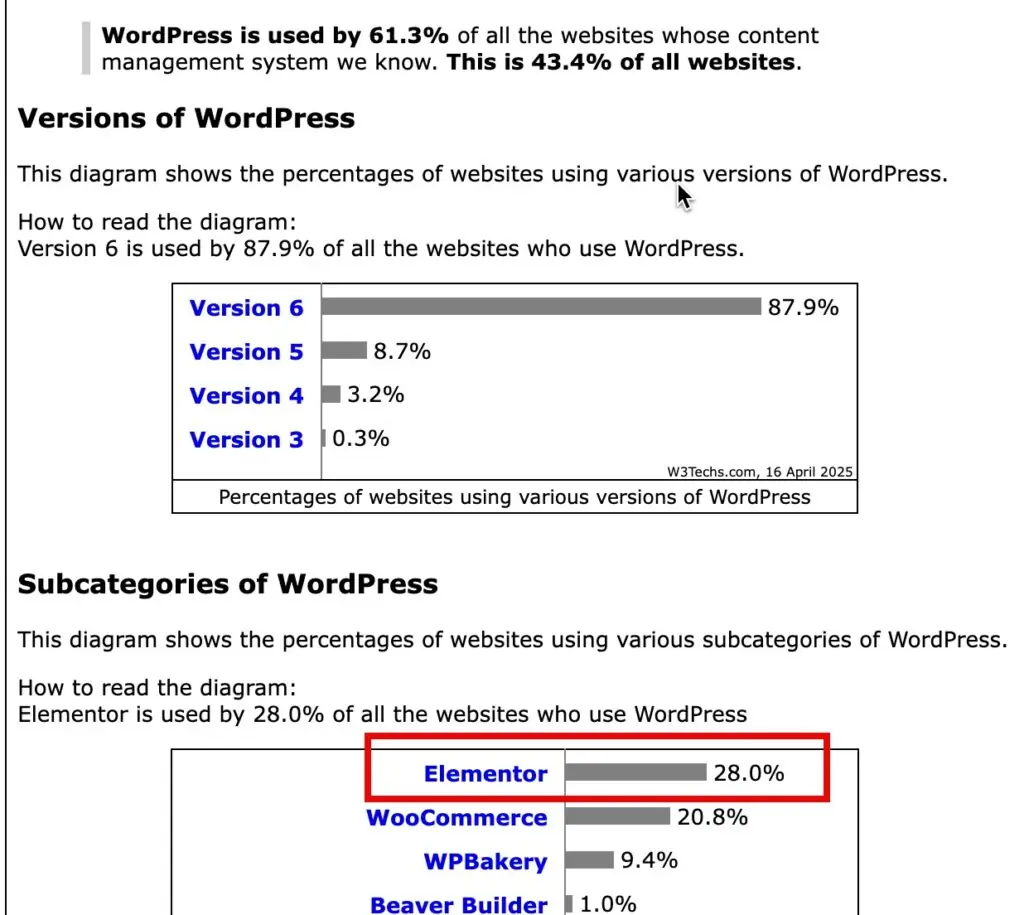
Anyone thinking that the use of WordPress page builders was dropping off can look at the Elementor market share stats. Currently 28% of WordPress sites are using Elementor, up from 22.6% in February 2024.
It is very interesting and promising to note that there is a clear trend with established page builders and with new ones being introduced. They are embracing and exposing CSS features and prioritizing performant output on the front-end. This is a rising tide that benefits the entire WordPress ecosystem.
Today, using a page builder is the most rational choice for WordPress site builders.
Recently Published
- AnalyticsWP Review – AnalyticsWP is a light-weight and easy to use plugin for self-hosted site analytics.
- First Look at Voxel – Voxel is a newish site building solution that uses Elementor and has features of interest for directory and membership sites.
- Advantages of WPVivid for Backup and Migration – Comparing the free version of each and we see there is a lot to like about WPVivid.
- Secure Custom Fields Issues for Users and Plugin Developers – The pro version of ACF is in the plugin directory under the name Secure Custom Fields. In this video I review some of the advantages and gotchas.
- The New Oxygen 6.0: What We Know and First Look – w00t! It is nice to see Oxygen freed from the old limitations and modernized.
- New from Greenshift: Greenlight Elements and Local Styles – The Greenshift team is following the trend of modern page builders and offering blocks that are HTML equivalents, together with CSS classes and variables.
- The Current State of Block Themes and a Reassessment – Block themes were just starting to catch on …
- The Most Innovative WordPress Plugin or Theme of 2024 – Results from a poll in the Dynamic WordPress Facebook group.
- First Look at Modular DS – A dashboard for managing multiple sites.
- Introducing Meta Box Lite – Finally, the Meta Box team releases a free all in one solution to compete with ACF free.
- Plugin and Theme Developers Do This Now – Some of us were lax in adding copyright notices to our plugins and themes.
- Ten WordPress Predictions for 2025 – Yep, page builders are mentioned.
- Is a WordPress Fork or a Community Distribution Model Coming in 2025? – In the middle of the WP Engine drama people were suggesting WordPress forks follow a “down stream” model, like Ubuntu is for Debian.
From Around the Web
- Speculative loading is a new performance feature included in WordPress 6.8. Rob Marlbrough reviews the options.
- A good resource for plugin developers, this tutorial reviews performance considerations when using WP_Query.
- This nice mini-tutorial looks at ways to customize core blocks using a child theme.
- This online tool helps you find the available hooks, actions and filters in themes and plugins.
Deals
- AnalyticsWP – Use coupon david-mccan10 for 10% off
- BBQ Pro – Get 30% Off Using Coupon SPRING2025
- WPVivid Pro – Get 20% off with coupon WEBTNG
What’s Next
I have been working on the DynamicWP website with the intention of having information available about all of the themes and plugins followed in the Dynamic WordPress Facebook Group. It is a work in progress.
David McCan
Thursday April 17th, 2025