
WP Perspectives Issue 18: The Current State of WordPress Builders
Do not spend so much time trying to choose the perfect opportunity, that you miss the right opportunity.
Michael Dell
Updated July 29, 2023
Dynamic WordPress and the Right Builder
It is not uncommon to see new and intermediate users struggling with the choice of builder. This one is more lightweight and has better markup, this one has a lifetime package, this one is too hard, but that one is missing features, and so the ping-pong of decision making goes. There is no “perfect” builder. The web, web technologies, tools, and WordPress are in a constant state of change. Combine that with the user’s abilities, client and site requirements, and the steady release of new tools, and it is a wonder that someone new can made any decision.
A veteran will tell them that you will learn more by building a few sites than you ever will by comparing feature lists. Also, it is important to pay attention to the basics, starting with learning about HTML and CSS. Those things not withstanding, the landscape has changed and things are different today than they were a few years ago. It is my opinion that today there are several choices that standout as clearly best of class. That hasn’t always been the case. In this discussion, I’ll share my perspective on builder options today. Note that these are my opinions. Feel free to comment and share how you see it.
Brochure Sites – Astra Starter Sites, Divi, Brizy, and Elementor Free
There are a lot of people building brochure sites. Here the content may not be updated very often and the site has very limited or no advanced functionality. These sites tend to emphasize design over functionality. People building brochure sites lean heavily on pre-designed templates.
Astra Starter Templates
- Over 1 million active installs
- More than 4,000 5 star reviews
The overwhelming popularity of this plugin is a phenomenon that many do not understand and often overlook.
Brizy Builder
- More than 90,000 active installs
- Move than 750 5 star reviews
Brizy introduced some nice design innovations and Brizy Cloud, in concert with the WordPress plugin, had a lot of promise, but Brizy failed to live up to expectations.

Divi
- The number of active installs is unknown, but probably over a million
Divi is in the middle of a big rewrite. Revisit it after version 5 is released.
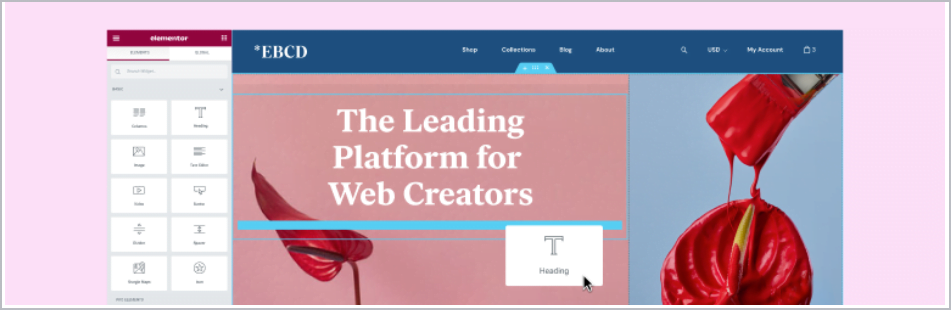
Elementor Core
- More than 12 million active installs
- More than 5,760 5 star reviews
Elementor’s popularity is partly due to the large number of features available in the “core” or free version.
You know what’s crazy? The Astra Starter Sites plugin has over a million active installs. This not only attests to the popularity of pre-designed starter templates, but also to the fact that people building these brochure sites don’t realize that once you’ve imported the template you don’t need the template plugin installed anymore!
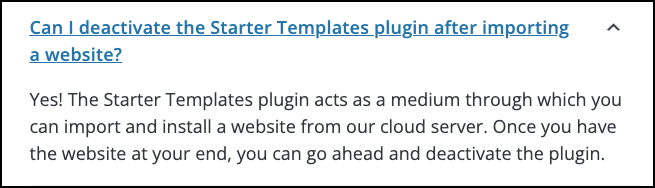
In terms of page builders, brochure sites are the bread and butter for Brizy, Divi, and Elementor free. Divi and Elementor are what I call “first generation” page builders. These builders try to hide the complexities of web technologies from the user and today they are showing their age. Yes, I know that Divi is being rewritten and Elementor has been working on modernizing, but they haven’t gotten there yet. Brizy is newer, but I lump it in with Divi and Elementor. Even though Brizy has a more modern design focus, in terms of working with web technologies and dynamic data it is very basic. What Gutenberg-based solution occupies this space? I guess it would be a combination of Astra, Spectra Free, and Astra Starter Templates.
Site builders who know their tools can create nice looking sites with these options, but I don’t know that there is currently a clear “best in class” option here. Users would probably default to Elementor due to its market share and the many third party addons.
Middle Ground – Kadence Blocks Pro, Spectra Blocks Pro, Stackable Pro, Elementor Pro, and Breakdance
The largest market segment is a middle ground where builder options are flexible and powerful “enough” for most sites while also not being too difficult to use. These types of sites may have a Custom Post Type, custom theme templates, and provide some advanced features. These solutions emphasize ease of use over power and flexibility, and try to insulate the user from the complexities of site building. They tend to have some important feature missing that may require additional plugins. Need directory functionality? Use a directory plugin, don’t build it yourself.

Stackable Blocks
- More than 80,000 active installs
- More than 360 5 star reviews
I have not tested Stackable recently.
In terms of Gutenberg-based solutions Kadence Blocks Pro, Spectra Blocks Pro, and Stackable Pro are popular options. Kadence and Spectra have the advantage of also having their own theme. This provides extra “juice,” they are easier to use and have a deeper integration of Customizer settings with the Gutenberg editor. Stackable has indicated that a theme of their own was in the works for a long time, but that hasn’t materialized. Currently the Blocksy theme is the best match for Stackable, and they both use Freemius, though Blocksy has gone to great pains to minimize its use. All three of these solutions support multiple custom fields plugins (ACF, Meta Box, and more). All three also work in the Site Editor, though the Kadence team discourages its use.
Kadence blocks have been around a long time. They were released even before Gutenberg came out of beta. The developer has worked hard to keep it up to date and the blocks are just now coming out of a rocky version 3 update (though not as bad as Stackable’s version 3 update at the end of 2021). Kadence Pro has a nice theme builder and they are greatly expanding the Form block which is available in current betas, but Kadence does not have a Query Loop block or the ability to work with repeater fields without code.
Spectra Pro is brand new, and a late comer. Brainstorm Force, the makers of Spectra (and Astra) seemed to have decided to wait for Gutenberg to mature before launching. Cooccurring with Spectra Pro is the release of the Spectra One block theme. Spectra Pro has a Query Loop block and Spectra Pro works and is officially supported in the Site Editor. It is save to say that Spectra Pro was built with the Site Editor in mind, something that didn’t exist when Kadence was released. Spectra Pro works well with the Astra theme also, for those who prefer a classic theme, but note that Astra still doesn’t have a theme builder! Apparently it is in the works now that Spectra Pro has been released.
Spectra
- More than 500,000 active installs
- More than 850 5 star reviews
Revisit Spectra once the Astra theme builder has been released. Depending on how good of a job they do on the theme builder, Spectra could outpace Kadence. Check back on the project in 6 months to a year.

Kadence
- More than 300,000 active installs
- More than 130 5 star reviews
Kadence currently has an edge over Spectra as Astra still does not have a theme builder. Kadence is in the middle of a medium term upgrade and enhancement process. Check back on the project in 6 months to a year.
In terms of page builders, Elementor Pro and Breakdance occupy this space. These builders provide advanced functionality, but try to insulate the user from the complexities of site building. While the Elementor team is trying to modernize Elementor Pro, it is not there yet and users still need addons for advanced features. Also, update and security issues continue to give Elementor a black-eye. Breakdance doesn’t have the best UI and some features are hidden behind multiple clicks, but the builder is fast, produces clean and performant output, and there is a growing community of happy users. Breakdance gets the nod as the best in class in this middle ground.

Elementor Pro
Over the past year or so Elementor has made strides recovering from the harm it did itself by ignoring dynamic data and advanced features. However, we are still seeing security and update issues.

Breakdance
Breakdance is a relatively easy to use builder that is advanced enough that it doesn’t need addons to make a site. Sites built with Breakdance are fast and performant.
Advanced but Limited – GenerateBlocks and Greenshift
There are two solutions in this area, both are Gutenberg based, GenerateBlocks and Greenshift. They both enjoy the advantage of having their own theme, though GenerateBlocks works with the classic GeneratePress theme and Greenshift works with the new Greenshift block-based theme. They are very different.
GenerateBlocks takes a very minimalistic approach. The free version only has six blocks and the pro version adds two more. Though it doesn’t come with a lot of blocks, there is some basic styling (easy to override). While the number of blocks is small, the Container, Grid, and Query Loop blocks work very well and provide a lot of flexibility. GenerateBlocks officially supports basic ACF field types, and even the free version has some support for dynamic data. They work together with the GeneratePress theme builder for creating theme templates and in the Site Editor. GenerateBlocks are lightweight, performant, and have extra features for developers. They are carefully crafted and a favorite for site builders who are comfortable with a bit of code and want control.
Greenshift is about the opposite. It is actually a suite of block plugins, based on a free version. There are animation, SEO, Query, Chart, and WooCommerce addons, with more than 90 blocks in total. The animation features of the core plugin and animation addon, along with the dynamic data features of the Query addon are the highlights for me. The many other blocks may appeal to those looking for faster builds. The Greenshift plugins have grown by accretion over time and the block options can be confusing. The Greenshift team is reworking the user interface to make it more coherent, but at this point it doesn’t seem like an advanced “modern” builder like Oxygen, Bricks, or Cwicly. Nevertheless, the suite has a lot of power and flexibility and the many blocks help people who want to build sites quickly.

Greenshift
- More than 20,000 active installs
- More than 40 5 star reviews
Powerful, but doesn’t feel like an advanced modern builder. Appeals to those who want a wide spectrum of features and can live with some incoherencies. Greenshift is currently in the middle of a refactoring of its UI and option panels. Revisit Greenshift when that is complete.
GenerateBlocks
- More than 100,000 active installs
- 99 5 star reviews
For site builders looking for a Gutenberg-based solution, who appreciate a minimalist approach, and are willing to use some code, GenerateBlocks is an excellent choice.
Advanced Builders – Oxygen, Bricks, and Cwicly
There are three advanced builders: Oxygen, Bricks, and Cwicly. Oxygen was a pioneer in creating the “2nd generation” of page builders which stay close to web technologies and which produce lean and performant output. The depth and standardization of CSS options and the good ability to work with dynamic data made Oxygen a good choice for those who wanted to build advanced sites. Oxygen is still a strong option, but over time it has become dated and the developers say it is difficult to modernize and add major new features due to the sunsetting of technologies used when the software was created. There are still bug fixes and nice updates, but Oxygen has lost some of its shine.

Oxygen Builder
Oxygen started a revolution and is a strong option, but I don’t think it still carries the torch as the most modern, most advanced, page builder.
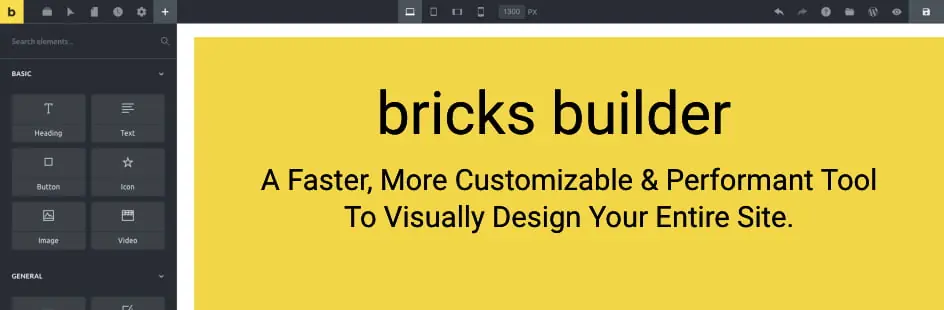
Bricks is seen as the natural successor to Oxygen. It installs as a theme and not a plugin. It is a bit easier to use than Oxygen and it is unencumbered by old slow technologies. The dynamic data support is excellent, the best of any builder available. Also, there are a number of integrations with, for example, WP Grid Builder. The Bricks knowledge base “academy” is excellent, there is a very active forum and Facebook group, and there are a number of 3rd party addons and template packs made to work with and extend Bricks. There are also a huge number of high quality YouTube training videos and the Bricks team is very responsive to user feedback. For site builders who want and have the skill to work with it, Bricks is an incredibly good page builder.
Bricks Builder
In the advanced builder category, Bricks stands out as clearly being the best page builder option.
The third advanced builder is Gutenberg-based, Cwicly. Since its release Cwicly has steadily improved and today it is the most capable Gutenberg solution. Cwicly has a learning curve and it is not a tool for clients, but is a good choice for advanced sites that need a lot of dynamic data features. Like Oxygen and Bricks, Cwicly has an extensive and standardized set of CSS options. There is full support for ACF field types, a query builder, display conditions, and web components have just been released in beta.

Cwicly
Cwicly is built on top of Gutenberg and the Site Editor. It is not as extensive as Bricks and only supports ACF, but Cwicly has excellent support for dynamic data features and stands above other Gutenberg-based options. It shines when it comes to working with dynamic data.
Other Options?
After publishing this round-up I got a fair amount of feedback related to options that weren’t mentioned. Here are my thoughts about several of those. Sharing my opinions about these other options probably will make people upset and they may still feel like I’m missing important points, but here are my thoughts for those who asked.
What About Beaver Builder?

Beaver Builder is known for its stability and for being easy to hand off to clients. Beaver Themer was the first theme builder and hit a good balance between easy of use, flexibility, and power.
Beaver Builder is of the same age as Divi / Elementor, more of less. Divi and Elementor, in their own ways, are being rewritten and modernized. I saw a message from someone on the Beaver Builder team something like “we get the message, we will start updating more.” Or that was my take away. I understand that some see it as a an advantage that there are only a few careful updates, but it seems too slow to me. It seems like modernizing Beaver Builder is a missed opportunity. I’ve seen 3 long time Beaver Builder users who are today using it as a container where they have integrated their own code or process. That made me feel like even long time users think they need something more. At one point in time, Beaver Builder with Beaver Themer could have been considered “best in class” but I don’t think that is true today.
Diane Kimantas, an agency owner and reader, suggested that Beaver Builder is great for building brochure sites as Astra Starter Templates still supports it and Beaver Builder is pretty easy to use. That certainly makes sense to me.
What About Builderius?
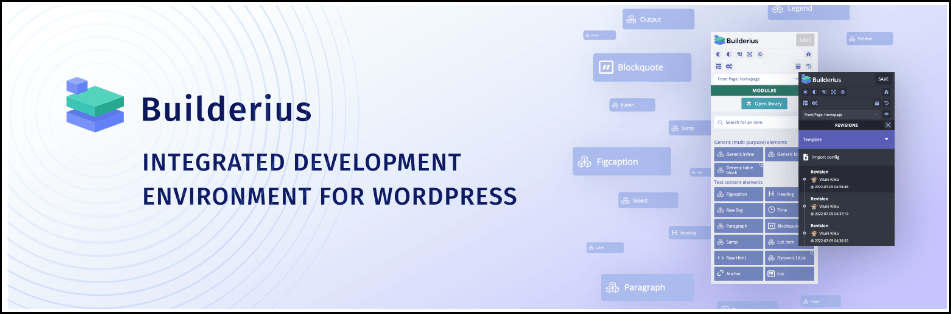
Builderius Pro launched in the last quarter of 2022. It is billed as the “integrated development environment for WordPress.” It was touted as the builder for developers created by developers. It is very flexible and has very good support for dynamic data. The team is now refactoring the UI to make it easier to use.
Builderius would fall into the advanced builder category. I’ve tested Builderius and I think it has a lot of promise but I don’t think it is ready for most people to use as their main builder. Perhaps an indicator of this is that the free version, which is required for the Pro version, only has 30+ active installs. The team has been busy with updates and I think it is a good idea to watch Builderius to see how it develops.
What About Zion Builder?

Zion Builder launched in August 2020. It is designed to be a light-weight advanced builder with an extensive and coherent set of CSS property options, but also with a large number of builder elements.
I generally had a good impression of the Zion Builder, but its release and development was happening about the same time as Bricks, which was a tough comparison. While Bricks was regularly releasing good updates, the releases of Zion Builder were spotty and slow. Also, Bricks has extensive support for dynamic data and custom field plugins, but Zion Builder lags behind. The free version of Zion Builder, which is required to be installed for Pro, has 2,000+ active installs, despite being promoted on AppSumo. It isn’t catching on yet and so doesn’t have the community created resources like Bricks. Of course, it may “click” for certain individuals and it is a fine builder, but I don’t think at this point that it could be considered “best in class.”
What About Pinegrow?

Pinegrow is a visual development environment. You can use it as a theme builder or a site builder. There is a stand-alone application or you can install it on a WordPress site as a plugin.
I haven’t used Pinegrow enough to offer a recommendation that extends beyond my personal experience and use cases. I tested the beta of the plugin version before its release and it was clear that wasn’t a tool I wanted to use. The instructions for testing were along the lines of “they wanted all feedback and suggestions, but don’t both saying anything about the user interface because it could not be changed.” So, right off the mark I was on edge as the UI was not very appealing. It was a beta, and most of the issues I submitted were quickly addressed, but why would I begin a new journey with a tool that already had a dated and unfixable UI? Pinegrow feels more like an “editor” than an builder. The work flow of the stand-alone version also doesn’t appeal to me.
Update: I was told by the developer that Pinegrow has started to modernize and improve the UI.
Pinegrow has good support for dynamic data features and you can use it to create stand-alone Gutenberg blocks that don’t require Pinegrow to be installed. Pinegrow is worth considering, especially if you need to provide custom PHP themes for client projects. The team is helpful and the product has new features added regularly. This is another one that would be in the advanced category. Your experience might be different than mine and if it “clicks” for you then go for it, but it is not high on my list as an option I might use.
Summary and Conclusions
There are two “mysteries of the universe” discussed here. One is that the Astra Starter Templates plugin has more than a million active installs when the plugin can be removed after the templates are chosen. This is probably the result of user uncertainty. In any event, it attests to the popularity of starter templates of this type – full page templates which together form a starter site.
The second mystery is why Elementor core (the free version) is so popular? I’m not sure that the Elementor team themselves fully understand it. If you are going by what people say on Facebook, there are much better choices available. I suspect that the popularity is related to just how large the WordPress do it yourself user population really is. This is something, at least, that the Elementor team is aware of, as the single site license and hosting platform seem to cater to it. I didn’t select Elementor core as a best in class option because of continuing update and security issues.
In the brochure / simple site category, I didn’t identify any option as a clear winner. Divi, a favorite of many designers, is in the process of a rewrite. Rather it is probably a matter of select the solution that works best for you.
In the “middle ground” category, I use Kadence myself and Spectra Pro is a good option too, however, Kadence has been around a long time and is refactoring itself while the Spectra ecosystem is still in the process of development (the forthcoming Astra Pro theme builder is supposed to work with Spectra Pro). Both of these are good choices, but I don’t feel that either one clearly stands out as the “best of the best” in their category. Elementor Pro is a strong option, but again suffers from update and security issues. The shinning star in this category is Breakdance. It has the advantages of being a modern, full featured builder that is relatively easy to use and that produces performant output.
It is interesting that in the “advanced but limited” category there are two Gutenberg-based options and they are about as different as possible. Greenshift exudes creativity while GenerateBlocks is clearly engineered. I prefer GenerateBlocks because I am impressed with how much you can accomplish with such a minimalist approach. Also, it seems like a cleaner solution, but of course users need to bring more of their own skills to the table.
It seems like today any mention of Oxygen or Breakdance could trigger a comment storm, but I would not start a new site with Oxygen today. Bricks is so good, as such an incredible price, that it is clearly the advanced page builder leader.
Like Bricks, when Cwicly launched it was far beyond what you’d expect from a version one. Over the many months of continual update and improvement cycles it has become clear to me that the founder, Louis Desire, has a vision. He has stayed with his vision, but has been flexible enough to take on the feedback from users. Cwcily is a clean, modern, performant, and innovative builder. I think it is the best choice from someone who wants an advanced Gutenberg-based solution.
My Picks at a Glance
It is interesting to note that all four of these were released between May 2020 and August 2022.

Breakdance
First released: June 2022
Custom field support: ACF, Meta Box, Toolset
Current Pricing (as of 7-19-2023): $99 a year for 1 site and $199 a year for unlimited sites.

GenerateBlocks
First released: May 2020
Custom field support: ACF
Current Pricing (as of 7-19-2023): $39 a year for 1 site, $69 a year for 10 sites., and $99 a year for 250 sites.

Bricks Builder
First released: March 2021
Custom field support: ACF, ACPT, Meta Box, Crocoblock, Toolset, Pods
Current Pricing (as of 7-19-2023): $99 lifetime for 1 site and $249 lifetime for unlimited sites.

Cwicly
First released: November 2021
Custom field support: ACF
Current Pricing (as of 7-19-2023): E49 a year for 3 sites. E99 a year for 10 sites., and E199 a year for 1,000 sites.
Recently Published
- Advanced Cwicly Tutorial: The Unicorn Solution Has Arrived – Wow! I am very impressed with Cwicly. Here’s a demo of why.
- Kraft Theme Builder Preview – Still early days, but this plugin allows you to create a PHP classic theme from within WordPress.
- First Look At The Core Framework – This is an exciting option for advanced site builders for working with CSS classes and variables.
- First Look at Spectra Pro – It was finally released. In some ways it met my expectations, which were high, and in others I think it needs more work.
- Creating Meta Box Blocks for Displaying Dynamic Data – This is a relatively easy option for people who need custom blocks.
- Should Plugin Security Audits Be An Expected Best Practice? – My opinion is yes, for plugins with a lot of active installs.
- Greenshift and Cwicly Compared – I get lots of questions about these two.
- Gutenberg Hub AI Writer Plugin – An AI Writer helper within the WordPress editor.
- Gutenberg Hub: Better YouTube Embed Plugin – An interesting single purpose plugin.
- Top 20 Most Popular WordPress Block Themes – It is interesting to see what the top block themes have in common and who the active developers are.
From Around the Web
- WPDailyNews – A new WordPress and web developer news site from yours’ truly.
- A nice 6.3 quick video review of what’s coming by Jamie Marsland.
- A cool WordPress infographic from Raitis Sevellis.
Deals
- PostX – A Gutenberg blocks collection that is available on AppSumo.
- Core Framework – Here is a build your own framework tool. Just launched, so needs some refinement, but very promising.
- WPCodeBox – This is a good code snippets plugin with a number of advanced features. I’m using it on my sites. Use the coupon code WEBTNG for 25% off.
- WordPress Lifetime packages currently on sale – Here is my page with current sales and discounts.
What’s Up Next
I’ve been diving into Cwicly, built another site with it, and expect to use it on a few more sites. I’d like to create more content about it. I’d also like to get deeper into Meta Box. I’ve started to think about making a course.
Thank you for reading. I’d like to hear what you have to say about the newsletter content and what you are excited about. Feel free to comment or send me an email through the contact form.
David McCan
July 19, 2023
Thanks David for the deep details provided. Sincerely looking forward to how Metabox compares with ACF in recent times. All the best
Thanks. I’ve started gathering material for the Meta Box and ACF comparison.
Not sure how I got here, but it was very valuable and informative read. I realized it’s about time to update my 5ish year old tools and process. I’ve been married to Impreza theme + WPBakery Builder for too long. Thanks!
I’m glad it was useful. Good luck with your retooling.